

Diagnostic MRI
What If Every Patient Could Be Heard?
EERS explores a new future for diagnostic MRI– one where clinicians and patients can communicate clearly inside the scanner to achieve more efficient results collaboratively
Communication Is Limited in Diagnostic MRI
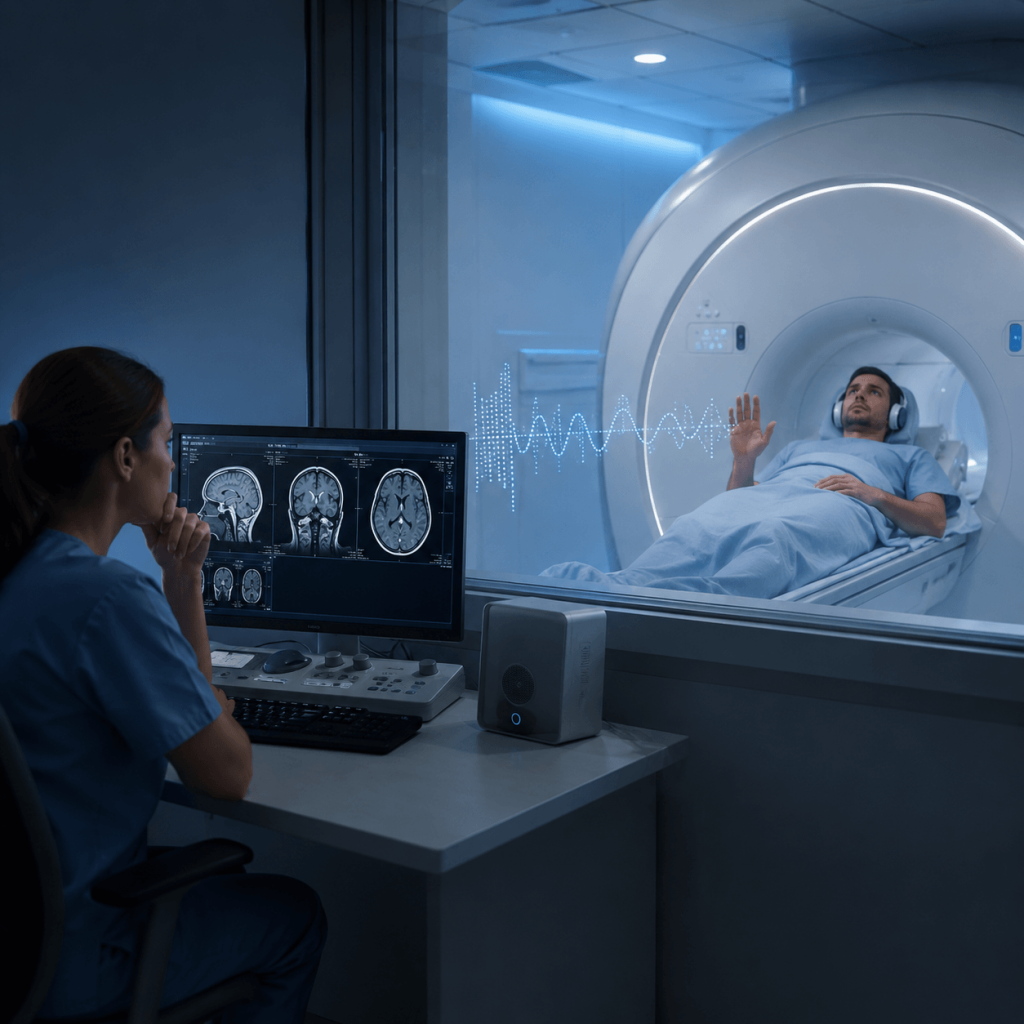
During a diagnostic MRI, patients are often isolated inside the scanner with minimal ability to communicate with technologists.
Instructions may be difficult to hear, and patients may struggle to respond clearly if they become .uncomfortable or anxious
This communication gap can lead to:
•Increased patient anxiety
•Rrepeated scans due to movement
•Longer scan times
•Reliance on sedation for pediatric patients
Improving communication inside the scanner could significantly improve the patient experience, reduce scan times and minimize repeat imaging due to movement.
Improving the MRI Experience
Clear communication inside the MRI bore has the potential to transform the patient experience during diagnostic scans.Patients who can clearly hear and respond to technologists are more comfortable and confident during the imaging process.
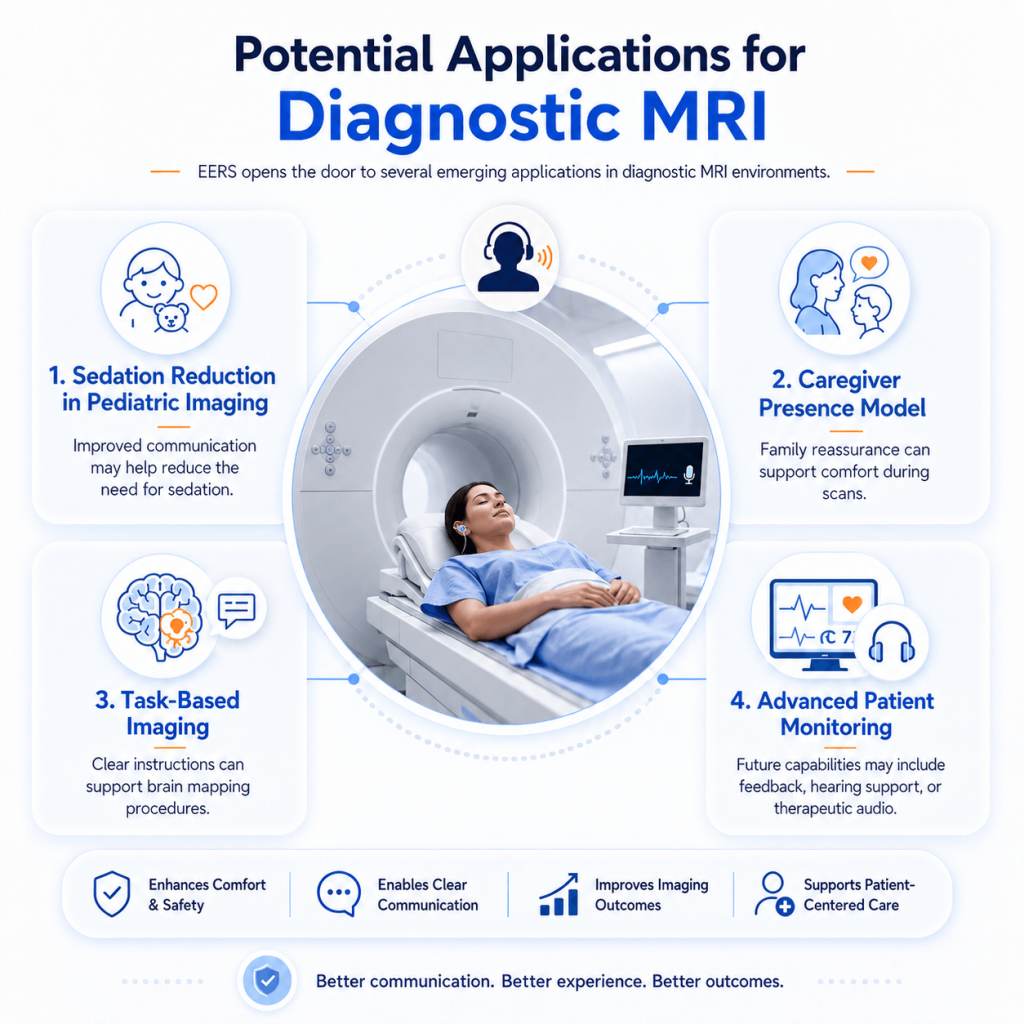
Better communication may help reduce anxiety, improve scan quality, and reduce the need for sedation in certain cases
The Largest MRI Market
Diagnostic MRI represents the largest segment of the MRI imaging ecosystem.
With more than 100 million scans performed annually, even small improvements in workflow efficiency or patient experience could have significant impact.
As imaging centers look for ways to improve patient satisfaction and reduce scan interruptions, reliable communication inside the MRI bore becomes increasingly valuable.
Exploring the Future of MRI Communication
EERS is working with clinical partners and research institutions to explore how improved communication inside MRI environments can support new clinical workflows and improve patient outcomes.
Research initiatives are exploring potential applications such as sedation reduction and enhanced patient interaction during imaging.
A Platform for MRI Communication
EERS is building a communication platform designed for the unique acoustic challenges of MRI environments.
By capturing voice directly from inside the ear canal and filtering scanner noise, the technology enables clear communication even during active scanning.
While current applications focus on interventional and remote MRI workflows, diagnostic MRI represents an important future opportunity for the platform.
Be Part of the Future of MRI Communication
Learn how EERS is exploring new possibilities for communication inside diagnostic MRI environments.