
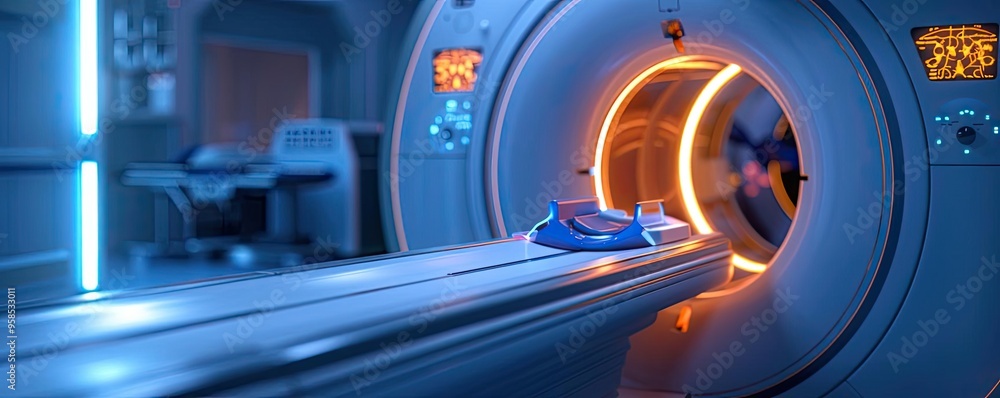
Remote MRI Communication
The Remote MRI Revolution Has a Communication Problem
EERS enables clear communication between remote MRI operators and patients, ensuring safe and effective scans even when technologists are miles away.






The Communication Gap in Remote MRI
Remote MRI allows technologists to operate scanners from centralized locations, addressing the growing shortage of MRI technologists and improving access to imaging services.
But communication inside the MRI environment remains a major challenge.
Remote operators often rely on indirect communication through on-site assistants or limited audio systems that cannot clearly capture patient responses.
This creates several challenges:
• Patients may not hear instructions clearly
• Operators cannot confirm patient responses reliably
• Workflow interruptions slow the scanning process
• Communication errors increase clinical risk
As remote MRI continues to expand globally, reliable communication between operators and patients becomes essential.

How EERS Supports Remote MRI
EERS provides a direct communication channel between remote MRI operators and patients.
1 — Remote Operator
The technician operates the scanner from a remote workstation.
2 — Direct Patient Communication
EERS captures the patient’s voice inside the MRI bore.
3 — Noise Filtering
Advanced algorithms remove MRI scanner noise.
4 — Clear Audio Connection
Remote operators hear the patient clearly and can provide instructions in real time.
The Communication Layer for Remote MRI
EERS enables clear two-way voice communication between remote operators and patients inside the MRI environment.

By capturing voice directly from inside the ear canal and filtering extreme scanner noise, EERS ensures that remote operators can hear and communicate with patients clearly throughout the scan.
Key Benefits

Improved Patient Safety
Clear instructions and responses reduce clinical risk.
Workflow Efficiency
Operators can communicate without pausing scans or relying on intermediaries.
Better Patient Experience
Patients feel reassured when they can clearly hear and respond to instructions
Scalable Remote Operations
Reliable communication enables healthcare systems to expand remote MRI programs confidently.
Designed for the Remote MRI Ecosystem
EERS integrates with emerging remote MRI platforms and imaging technology providers.
These systems enable technologists to remotely operate scanners, monitor patient status, and manage imaging workflows.
EERS adds the missing communication layer that connects operators directly with patients inside the MRI bore.
Reference Integration partners if possible?
Built for the Loudest Environment in Medicine
MRI scanners create extreme acoustic noise that makes communication extremely difficult.
Traditional audio systems cannot capture voice clearly inside the MRI bore.
EERS uses in-ear voice capture, AI-driven noise filtering, and patented speech reconstruction to deliver clear communication even during active MRI scanning.
Trusted by Leading Clinicians
Early clinical partners and interventional specialists are exploring how EERS enables new possibilities for MRI-guided procedures.
Endorsements from leading clinicians and pediatric cardiac surgeons highlight the importance of clear communication during complex MRI interventions.
(Placeholder for surgeon testimonial)
Supporting the Next Generation of Imaging Workflows
Remote MRI scanning represents one of the most significant changes in imaging operations in decades.
As healthcare systems adopt remote scanning to address workforce shortages and improve efficiency, reliable communication becomes essential to maintaining safety and quality.
EERS provides the communication infrastructure that allows remote MRI programs to scale safely and effectively.
Enable Clear Communication in Remote MRI
Discover how EERS supports safe and effective remote MRI workflows.